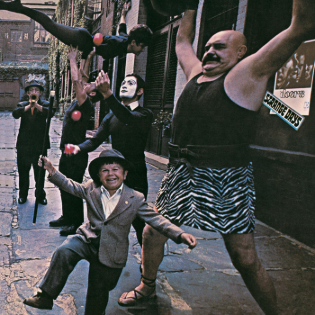
Strange Days
By The Doors
The Story
Released in 1967, Strange Days followed quickly after The Doors' debut and captured the band deepening and expanding the dark, atmospheric identity that had first brought them attention. While their debut had been shaped by live performance, this second album leaned more heavily into studio experimentation, reflecting both the rapid changes in the cultural landscape of the late 1960s and the band’s growing confidence in exploring new sonic territory. Produced again by Paul A. Rothchild, the album presented a more surreal and introspective vision, emphasizing mood, texture, and psychological tension.
The title track, 'Strange Days', sets the tone with its hypnotic rhythm and layered production, including the use of early synthesizer sounds that contributed to its unsettling atmosphere. Jim Morrison’s lyrics throughout the album often focus on alienation, identity, and disconnection, themes that resonated with the shifting cultural climate of the time. Songs like 'You're Lost Little Girl' and 'Unhappy Girl' reflect a more personal and introspective side, while maintaining the band’s signature sense of unease.
'People Are Strange' became one of the album’s most recognizable tracks, capturing feelings of isolation and social estrangement in a concise and memorable form. Its success helped reinforce the band’s growing popularity, even as their music continued to explore darker emotional territory. 'Love Me Two Times' blends blues influences with a more urgent and direct approach, reportedly inspired by themes connected to uncertainty and finality during a time of global tension.
The album also includes some of the band’s most experimental work. 'Horse Latitudes' stands out as a spoken-word piece built around dissonant sound design, drawing from Morrison’s interest in poetry and pushing the boundaries of conventional rock structure. 'Moonlight Drive', which had been part of the band’s repertoire before their debut, reflects their earlier sound while benefiting from the more advanced studio techniques used during these sessions.
Closing the album is 'When the Music's Over', a long and dynamic composition that mirrors the role of 'The End' on their debut. It moves through multiple sections, combining quiet, atmospheric passages with powerful climaxes, and addresses themes of destruction, renewal, and the consequences of human action. The track highlights the interplay between the band members, particularly Ray Manzarek’s keyboard work and Robby Krieger’s guitar, alongside Morrison’s dramatic vocal delivery.
Strange Days solidified The Doors’ reputation as one of the most distinctive and challenging bands of their era. By embracing studio experimentation and darker thematic material, the album built on the foundation of their debut while pushing further into psychological and sonic exploration. It remains a key work in their catalog, reflecting a moment when the band fully embraced their identity as both musicians and creators of a unique and immersive artistic world.